
STUDENT SPOTLIGHT: Each month, or every other month, a student will provide a 1-page illustrated abstract of the research they are currently conducting. This is a wonderful opportunity for the student, for our International Society for Concrete Pavements (ISCP) Members, and for the transferring and sharing technology/research through our concrete paving industry.
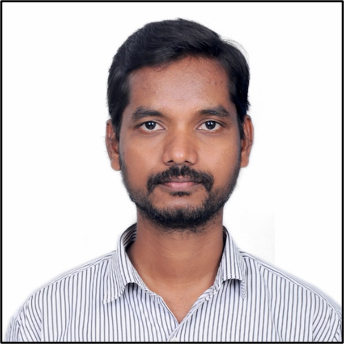
The ISCP “STUDENT RESEARCH SPOTLIGHT” for May 2026 is Srinivas Jadala, a PhD candidate in the Department of Civil and Environmental Engineering at the Indian Institute of Technology Tirupati (Tirupati, India)
BIO:
Srinivas Jadala is a Doctoral Candidate in the Department of Civil and Environmental Engineering at the Indian Institute of Technology Tirupati, India, working with Prof. Krishna Prapoorna Biligiri in collaboration with Prof. Waleed Zeiada from the University of Sharjah, UAE. His research focuses on developing sustainable pavement systems through an integrated experimental and computational framework that connects microstructural characteristics to engineering performance. His doctoral research is a collaboration between the Indian Institute of Technology Tirupati, India and the University of Sharjah, UAE, funded by Ministry of Energy and Infrastructure, Government of UAE. He has recently submitted his Ph.D. dissertation and expects to defend it soon.
TITLE: Advancing Sustainable Pavement Materials through Microstructure-Informed Characterization
Pavement systems are increasingly required to address challenges related to sustainability, urban heat island effects, and stormwater management. In this context, pervious concrete (PC) has emerged as a promising solution due to its ability to facilitate water infiltration and reduce surface temperatures. However, its performance is highly dependent on complex pore structures that are difficult to quantify using conventional methods. Srinivas’s research addresses this challenge by leveraging X-ray computed tomography-based imaging to capture the 3D pore structure of PC. Using advanced image analysis techniques, he systematically quantified pore morphology, including size distribution, connectivity, and shape characteristics. Figure 1 illustrates the systematic workflow for pore structure characterization of PC using image analysis techniques.
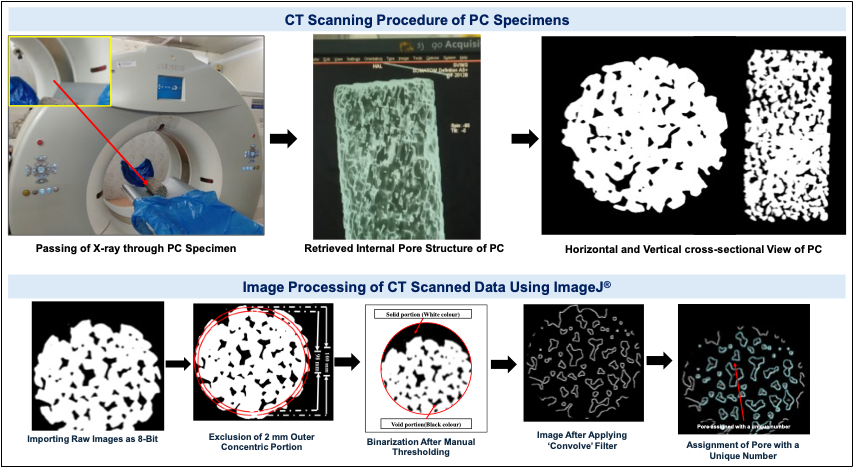
Figure 1. Pore Structure Characterization of Pervious Concrete Using Image Analysis
In addition to microstructural analysis, Srinivas has explored the use of industrial by-products such as steel slag aggregates in pavement materials. His work demonstrated the potential of such materials to enhance thermal performance and contribute to the mitigation of urban heat island effects, while also promoting resource efficiency and sustainability.
Looking ahead, Srinivas aims to extend his research to asphalt and concrete pavement systems, with a focus on microstructure-informed modeling of heat and moisture transport, durability, and climate-resilient pavement design. His broader goal is to bridge the gap between material-scale characterization and field-scale performance, enabling the development of next generation sustainable and resilient pavement infrastructure.
ISCP would like to feature a “STUDENT RESEARCH SPOTLIGHT” each month, or every other month. If you would like to nominate a student, or if you are a student and would like to nominate yourself or a colleague, please send ISCP an email to: newsletter@concretepavements.org